1989
It started with words.
My professional life began in legal word processing at civil law firms.
Proofreading was initially one part of the job, but attorneys began relying on me to review documents before they went out. Proofreading became editing. Editing sometimes became writing. At the same time, I was studying creative writing through Writer's Digest School and writing novels of my own. After my first son was born, I decided I wanted something of my own—I studied editing seriously and began freelancing while working full time. I didn't know it then, but I'd begun building two careers at once.
Then I needed the Internet to solve a problem.
I'd started a local writers group in Houston and built a website for it. Then something unexpected happened—hundreds of writers from outside Houston wanted to join.
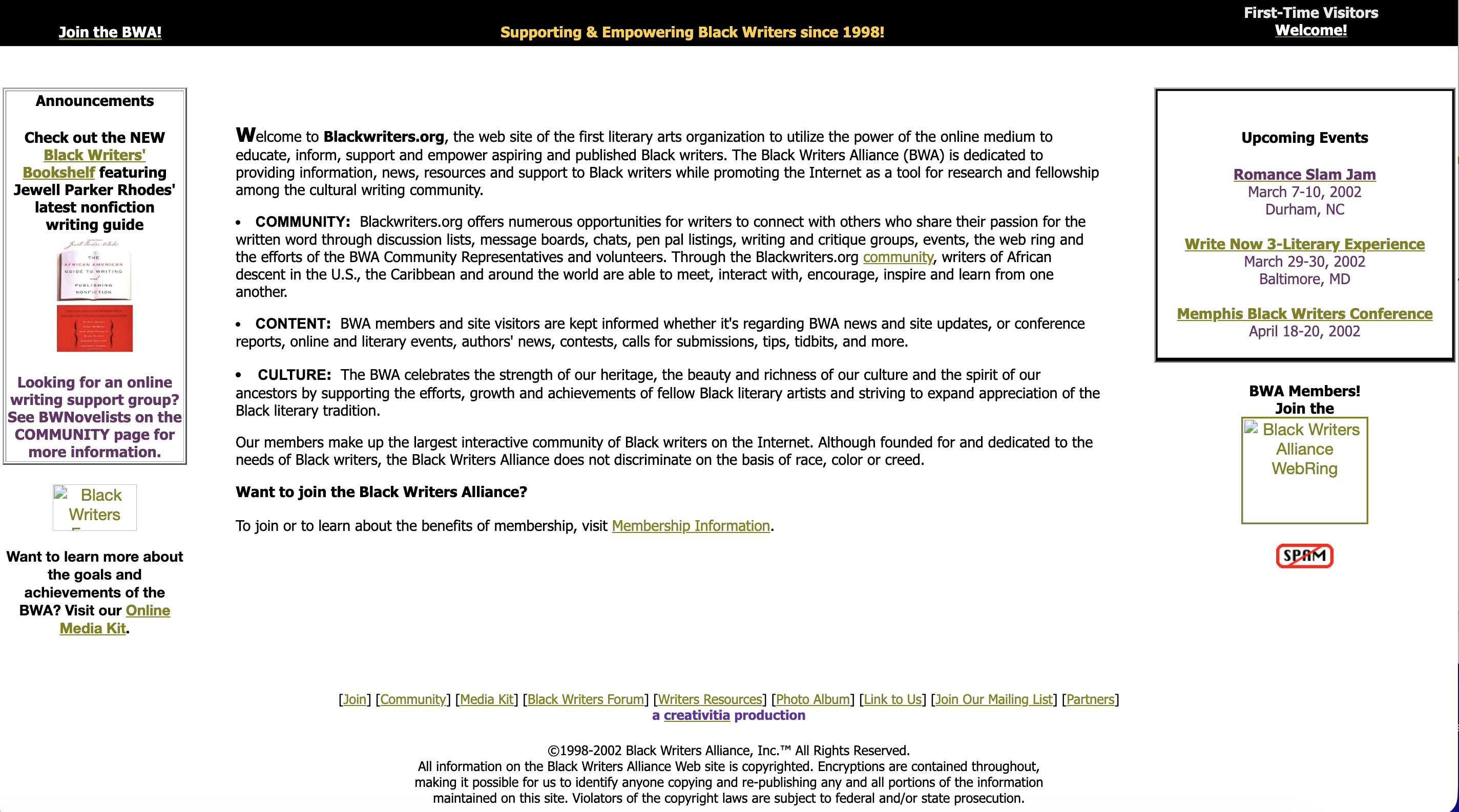
So instead of keeping the group local, I expanded the idea. On Juneteenth 1998, the African American Online Writers Guild was formed with 39 members of the Houston group. I taught myself HTML, CSS, CGI and PHP and worked with practically every web-development application I could get my hands on.
Within three years the organization had grown past 7,000 members, was named twice among Writer's Digest's 101 Best Websites for Writers, and was covered by The New York Times, Black Issues Book Review, Upscale, and others. In 2001, Dallas Mayor Ron Kirk proclaimed Black Writers Alliance Day in the city.
At the time, I thought I was building a writers community. Looking back, I was practicing information architecture before I knew there was a name for it—or a profession called information architect.
The online community wanted to meet in person.
My response was essentially: if we're going to meet, we need to meet for a purpose. I negotiated the hotel contract and helped build an educational program around the craft and business of writing.
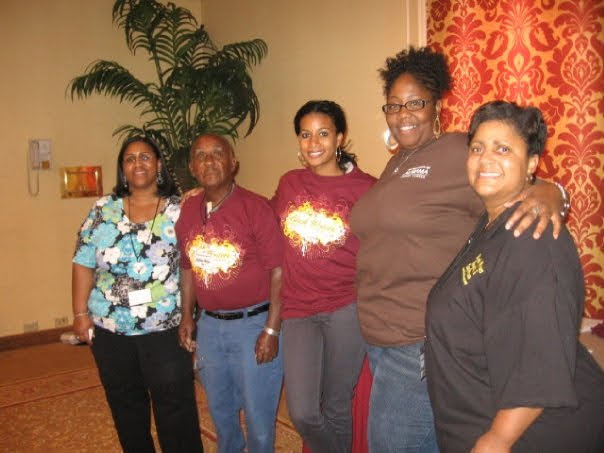
The first Black Writers Reunion & Conference was held in Atlanta in August 2000. We had built a community online that genuinely behaved like family, and the conference was where that family finally occupied the same physical space. It became a series of nine writers conferences and five writers retreats. In 2010 I formalized that work as Boss Meetings & Events and went on to produce events for other organizations while continuing my full-time career.
2000s–10s
Technology stopped being something I did on the side.
Arch Wireless created a technical writer position for me after seeing my portfolio, then handed me the corporate intranet. I rebuilt it—writing, editing, web development, content management, and information architecture stopped being separate skills.
At Locke Lord, where I spent fourteen years, my official work centered on legal document technology. In practice it crossed technical support, software, training, documentation, process design, SharePoint, content management, and document investigation. I became interested enough in metadata and corruption recovery to earn a Digital Forensics Examiner credential and seriously consider forensics as a next career—while still freelancing, still building websites, still operating businesses, still going to school.
I never had a moment where I announced I was going to become an information architect. I was already doing the work. As I studied content strategy and information science, the discipline gave me language for things I'd learned to do through practice. It wasn't a career I entered—it was a profession that eventually named the way I'd been thinking all along.